FunctionBijective[f,x]
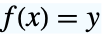
FunctionBijective[f,x,dom]
测试对于每一个 y∈dom,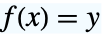 是否只有一个解 x∈dom.
FunctionBijective[{f1,f2,…},{x1,x2,…},dom]
测试对于每一个 y1,y2,…∈dom, 是否只有一个解 x1,x2,…∈dom.
FunctionBijective[{funs,xcons,ycons},xvars,yvars,dom]
测试对于每一个受约束条件 ycons 限制的 yvars∈dom, 是否只有一个受约束条件 xcons 限制的解 xvars∈dom.


FunctionBijective
FunctionBijective[f,x]
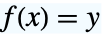
FunctionBijective[f,x,dom]
测试对于每一个 y∈dom,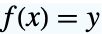 是否只有一个解 x∈dom.
FunctionBijective[{f1,f2,…},{x1,x2,…},dom]
测试对于每一个 y1,y2,…∈dom, 是否只有一个解 x1,x2,…∈dom.
FunctionBijective[{funs,xcons,ycons},xvars,yvars,dom]
测试对于每一个受约束条件 ycons 限制的 yvars∈dom, 是否只有一个受约束条件 xcons 限制的解 xvars∈dom.
更多信息和选项
- 双射函数也被称为一一映射 (one-to-one) 或 onto.
- 如果对于每个
 ,存在唯一的
 ,使得
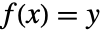 ,则函数
 是双射的.
- 如果映射
 是双射,则 FunctionBijective[{funs,xcons,ycons},xvars,yvars,dom] 返回 True,其中
 是 xcons 的解集,
 是 ycons 的解集.
- 如果 funs 含有除 xvars 之外的参数,则结果通常为 ConditionalExpression.
- dom 的可能的值为 Reals 和 Complexes. 如果 dom 是 Reals,则所有变量、参数、常数和函数值都必须为实数.
- funs 的定义域受 FunctionDomain 给定的条件限制.
- xcons 和 ycons 可含有等式、不等式或它们的逻辑组合.
- 可给出以下选项:
-
Assumptions $Assumptions 对参数的设定 GenerateConditions True 是否生成关于参数的条件 PerformanceGoal $PerformanceGoal 优先考虑速度还是质量 - GenerateConditions 的可能的设置包括:
-
Automatic 只给出非通用条件 True 给出所有条件 False 不给出条件 None 如果需要条件则不经计算直接返回 - PerformanceGoal 的可能设置为 "Speed" 和 "Quality".

范例
打开所有单元 关闭所有单元基本范例 (4)
FunctionBijective[Sinh[x], x]FunctionBijective[Sinh[x], x, Complexes]FunctionBijective[{x + y ^ 3, y - x ^ 5}, {x, y}]FunctionBijective[x ^ 3 + a x + b, x]范围 (10)
FunctionBijective[x ^ 3 - x, x]Plot[{x ^ 3 - x, 1 / 4}, {x, -2, 2}]FunctionBijective[{x ^ 3 - x, x > 1, y > 0}, x, y]
Plot[{x ^ 3 - x, 10}, {x, 1, 3}]FunctionBijective[Log[x], x, Complexes]Reduce[Log[x] == y, x]
FunctionBijective[{Log[x], True, -Pi < Im[y] ≤ Pi}, x, y, Complexes]FunctionBijective[{x ^ 4, Re[x] ≥ 0 && Im[x] > 0 || x == 0}, x, Complexes]
FunctionBijective[x ^ 4, x, Complexes]Reduce[x ^ 4 == 1, x]FunctionBijective[{x + 1, Element[x, Integers], Element[y, Integers]}, x, y]A = {{1, 2, 3}, {4, 5, 6}, {7, 8, 9}};FunctionBijective[A.{x, y, z}, {x, y, z}]B = {{1, 2, 3}, {4, 5, 6}, {7, 8, 0}};FunctionBijective[B.{x, y, z}, {x, y, z}]当且仅当线性映射的矩阵是方阵且具有最大秩,线性映射才是双射的:
{MatrixRank[A], MatrixRank[B]}
FunctionBijective[{x ^ 3 - 3x y ^ 2, 3x ^ 2y - y ^ 3}, {x, y}]

FunctionBijective[{{x ^ 3 - 3x y ^ 2, 3x ^ 2y - y ^ 3}, x ≥ 0 && y ≥ 0, u ≤ 0 || v ≥ 0}, {x, y}, {u, v}]
FunctionBijective[{x + y ^ 3, y - x ^ 5}, {x, y}, Complexes]Det[D[{x + y ^ 3, y - x ^ 5}, {{x, y}}]]Det[D[{x - (x + y / 27) ^ 3, y + (3 x + y / 9) ^ 3}, {{x, y}}]]FunctionBijective[{x - (x + y / 27) ^ 3, y + (3 x + y / 9) ^ 3}, {x, y}, Complexes]FunctionBijective[x ^ 3 + a x ^ 2 + b x + c, x]FunctionBijective[{x + a y ^ 3, y + b x ^ 3}, {x, y}]选项 (4)
Assumptions (1)
此处,FunctionBijective 给出有条件的答案:
FunctionBijective[{x + a y ^ 3, y + 2 x ^ 3}, {x, y}]
FunctionBijective[{x + a y ^ 3, y + 2 x ^ 3}, {x, y}, Assumptions -> a > 0]GenerateConditions (2)
默认情况下,FunctionBijective 可能会对符号参数生成条件:
FunctionBijective[x ^ 3 + a x ^ 2 + b x + c, x]如果设置 GenerateConditions->None,FunctionBijective 会失败,而不是给出有条件的结果:
FunctionBijective[x ^ 3 + a x ^ 2 + b x + c, x, GenerateConditions -> None]FunctionBijective[x ^ 3 + a x ^ 2 + b x + c, x, GenerateConditions -> False]FunctionBijective[a x, x, Complexes]如果设置 GenerateConditions->Automatic,不报告通常为真的条件:
FunctionBijective[a x, x, Complexes, GenerateConditions -> Automatic]PerformanceGoal (1)
用 PerformanceGoal 避免潜在费时的计算:
FunctionBijective[x ^ 5 + a x ^ 4 + b x ^ 3 + c x ^ 2 + d x, x, PerformanceGoal -> "Speed"]FunctionBijective[x ^ 5 + a x ^ 4 + b x ^ 3 + c x ^ 2 + d x, x]应用 (11)
基本应用 (8)

FunctionBijective[x ^ 3, x]Plot[{x ^ 3, -3, 3}, {x, -2, 2}]
FunctionBijective[x ^ 3 - x, x]
Plot[{x ^ 3 - x, 1 / 4}, {x, -2, 2}]
FunctionBijective[ArcTan[x], x]
Plot[{ArcTan[x], 2}, {x, -5, 5}]
FunctionBijective[Log[x], x]Plot[{Log[x], -1, 1}, {x, 0, 5}]
FunctionBijective[SinhIntegral[x], x]Plot[SinhIntegral[x], {x, -5, 5}]
FunctionBijective[Hyperfactorial[x], x]Plot[Hyperfactorial[x], {x, -1, 2}]FunctionInjective[x ^ 3 / (x ^ 2 + 1), x]FunctionSurjective[x ^ 3 / (x ^ 2 + 1), x]FunctionBijective[x ^ 3 / (x ^ 2 + 1), x]Plot[x ^ 3 / (x ^ 2 + 1), {x, -1, 1}]
FunctionInjective[x Sin[x], x]FunctionBijective[x Sin[x], x]Plot[x Sin[x], {x, -20, 20}]
FunctionSurjective[Erf[x], x]FunctionBijective[Erf[x], x]Plot[Erf[x], {x, -5, 5}]f = (3x ^ 7 + 3x ^ 2 + x ^ 3) / (x ^ 6 + 2x ^ 2);FunctionBijective[f, x]Manipulate[Plot[{f, a}, ...], {{a, 1.5}, -5, 5}]
FunctionBijective[SinIntegral[x], x]Manipulate[Plot[{SinIntegral[x], a}, ...], {{a, 1.5}, -3, 3}]
FunctionBijective[x ^ 3, x]FunctionBijective[Sinh[x], x]FunctionBijective[#, x]& /@ {Sinh[x ^ 3], Sinh[x] ^ 3}


Subscript[A, 1] = {{1, 2, 3}, {4, 5, 6}, {7, 8, 0}};MatrixRank[Subscript[A, 1]]FunctionBijective[Subscript[A, 1].{x, y, z} + {1, 2, 3}, {x, y, z}]Subscript[A, 2] = {{1, 2, 3}, {4, 5, 6}, {7, 8, 9}};MatrixRank[Subscript[A, 2]]FunctionBijective[Subscript[A, 2].{x, y, z} + {1, 2, 3}, {x, y, z}]概率 (1)

pdf = PDF[NormalDistribution[], x]FunctionSign[pdf, x]Plot[pdf, {x, -5, 5}]cdf = CDF[NormalDistribution[], x]FunctionBijective[{cdf, True, 0 < y < 1}, x, y]Plot[cdf, {x, -3, 3}]SurvivalFunction 也是到  的双射函数:
sf = SurvivalFunction[NormalDistribution[], x]FunctionBijective[{sf, True, 0 < y < 1}, x, y]Plot[sf, {x, -5, 5}]Quantile 是到实数的双射函数:
qf = Quantile[NormalDistribution[], x]FunctionBijective[qf, x]Plot[qf, {x, 0, 1}]微积分 (2)
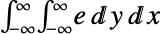
e = Exp[-(x ^ 3 + y ^ 2) ^ 2] / (y ^ 6 + 1)x ^ 2y ^ 2;

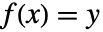
f[{u_, v_}] := 1 / 9Exp[-u ^ 2] / (v ^ 2 + 1)g = {x ^ 3 + y ^ 2, y ^ 3};f[g]Det[D[g, {{x, y}}]] === e

FunctionBijective[g, {x, y}]Integrate[f[{u, v}], {u, -Infinity, Infinity}, {v, -Infinity, Infinity}]Integrate[e, {x, -Infinity, Infinity}, {y, -Infinity, Infinity}]
f = {(2 r (1 - t^2) u/(1 + t^2) (1 + u^2)), (4 r t u/(1 + t^2) (1 + u^2)), (r (1 - u^2)/1 + u^2)};ParametricPlot3D[Evaluate[f /. r -> 1], {t, -50, 50}, {u, 0, 50}, ...]FunctionBijective[{f, u > 0, x ^ 2 + y ^ 2 + z ^ 2 == r ^ 2 && (y ≠ 0 || x > 0)}, {t, u}, {x, y, z}, Assumptions -> r > 0]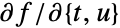
df = D[f, {{t, u}}];Integrate[Sqrt[Det[Transpose[df].df]], {u, 0, ∞}, {t, -∞, ∞}, Assumptions -> r > 0]属性和关系 (3)


FunctionBijective[x ^ 2 + x + 1, x]FunctionBijective[x ^ 3 + x + 1, x]用 Solve 求出解:
Solve[x ^ 2 + x + 1 == y, x, Reals]Solve[x ^ 3 + x + 1 == y, x, Reals]一个在区间上连续的实函数是双射的,当且仅当它是单调的并且在端点处的极限是  和
 :
FunctionBijective[{Sec[x], -Pi / 2 < x < Pi / 2}, x]FunctionBijective[{Tan[x], -Pi / 2 < x < Pi / 2}, x]Plot[{Sec[x], Tan[x]}, {x, -Pi / 2, Pi / 2}]用 FunctionMonotonicity 确定函数的单调性:
FunctionMonotonicity[{Sec[x], -Pi / 2 < x < Pi / 2}, x]FunctionMonotonicity[{Tan[x], -Pi / 2 < x < Pi / 2}, x]用 Limit 计算极限:
Limit[{Sec[x], Tan[x]}, x -> -Pi / 2, Direction -> "FromAbove"]Limit[{Sec[x], Tan[x]}, x -> Pi / 2, Direction -> "FromBelow"]当且仅当复多项式映射有多项式逆元 (polynomial inverse),它才是双射的:
F = {x - (x + y / 27) ^ 3, y + (3 x + y / 9) ^ 3};FunctionBijective[F, {x, y}, Complexes]用 Solve 求多项式的逆元:
G = {x, y} /. Solve[{u, v} == {x - (x + y / 27) ^ 3, y + (3 x + y / 9) ^ 3}, {x, y}][[1]]

Expand[G /. Thread[{u, v} -> F]]Expand[F /. Thread[{x, y} -> G]]可能存在的问题 (2)
FunctionBijective 用 FunctionDomain 确定函数的实定义域:
FunctionBijective[{Cosh[Sqrt[x]], True, y ≥ 1}, x, y]//Quiet在 FunctionDomain 给出的实定义域上,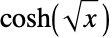 是到
 的双射函数:
FunctionDomain[Cosh[Sqrt[x]], x]Plot[{Cosh[Sqrt[x]], 7}, {x, 0, 10}]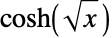

Plot[{Cosh[Sqrt[x]], -1 / 2}, {x, -20, 10}]

Refine[Element[Sqrt[x], Reals], x < 0]FunctionBijective 将定义域限制为 ycons 的解集的逆像:
FunctionBijective[{x / 2, Element[x, Integers], Element[y, Integers]}, x, y]文本
Wolfram Research (2020),FunctionBijective,Wolfram 语言函数,https://reference.wolfram.com/language/ref/FunctionBijective.html.
CMS
Wolfram 语言. 2020. "FunctionBijective." Wolfram 语言与系统参考资料中心. Wolfram Research. https://reference.wolfram.com/language/ref/FunctionBijective.html.
APA
Wolfram 语言. (2020). FunctionBijective. Wolfram 语言与系统参考资料中心. 追溯自 https://reference.wolfram.com/language/ref/FunctionBijective.html 年